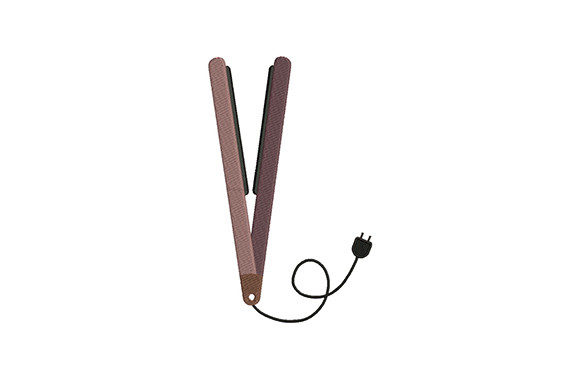
Hair Straightener: A Stylish Embroidery Design Review
As an experienced embroidery designer who has spent years digitizing and reviewing files for commercial use, I approach every new machine embroidery design with a critical eye. It is not just about whether a file looks cute on a screen; it is about how that digital embroidery file translates into a tangible asset for a small business. Today, I am reviewing the Hair Straightener design, a file situated firmly in the Beauty category. My goal is to evaluate its potential for branded merchandise, staff uniforms, and boutique product lines.
First Impressions and Visual Personality
Upon loading the Hair Straightener file into my editing software, the immediate impression is one of modern playfulness. The description promises a "stylish vibe," and visually, the design delivers a clean, contemporary aesthetic that fits well within the current beauty industry trends. It feels less like a rustic, handmade sketch and more like a polished icon suitable for a professional salon or a trendy online boutique.
The lines appear crisp, suggesting a design that balances detail with readability. For business owners in the Beauty sector, this visual personality is crucial. It communicates professionalism without being overly stiff. Whether you are running a hair salon, a cosmetic shop, or a lifestyle brand, this design acts as a friendly ambassador for your brand identity. It avoids the trap of looking too generic, offering enough character to stand out on a finished product while remaining recognizable at various scales.
Real-World Business Applications
The true test of any embroidery file is its versatility in real-world scenarios. The Hair Straightener design shines when applied to small business merch. Imagine a local hair studio needing to upgrade their staff uniforms. This design works exceptionally well as a chest logo accent on work shirts or as a subtle sleeve detail. It adds a touch of thematic relevance without overwhelming the garment.
For retail environments, the potential for embroidered patch production is high. A batch of patches featuring this icon can be sewn onto denim jackets, tote bags, or even apron pockets, creating instant custom apparel that employees or customers love. Speaking of aprons, apron embroidery is a fantastic use case here. In a salon setting, a stylist's apron adorned with this motif reinforces their expertise and adds a cohesive look to the team.
Beyond uniforms, consider the power of customer gifts and event merchandise. A tote bag design featuring the Hair Straightener makes for an excellent giveaway at beauty expos or a premium add-on for high-value service packages. For Etsy sellers and crafters, this file serves as a core design asset for creating niche products like makeup bag accents or branded headbands. The ability to place this on sneakers, as suggested by the product description, opens doors for personalized footwear services, a growing market in the custom decoration space.
Strategic Placement and Technical Considerations
While the design is versatile, there are specific areas where caution is required. When scaling down for cap embroidery, one must be mindful of the curve of the front panel. Detailed outlines can sometimes get lost or distort on highly curved surfaces if the stitch count is too high or the density is not optimized. Similarly, if you are aiming for a tiny patch size, ensure that the internal details of the straightener do not merge together.
Stitch density is another critical factor. If the design relies on heavy saturation to achieve its "stylish" look, it may become stiff on lightweight fabrics. For items that require frequent washing, such as staff t-shirts or gym towels, a lower density often ensures better durability and softness. Additionally, pay close attention to thread colors against dark uniforms. A design that pops on white may vanish on black navy unless underlay stitches and contrast colors are carefully selected.
Fabric texture also plays a role. On textured fabrics like pique polo shirts or thick canvas totes, fine details might get swallowed by the weave. Always test the Hair Straightener on the actual material you intend to use before committing to a large production run. This is especially true for commercial embroidery projects where consistency across hundreds of units is mandatory.
Impact on Brand Identity and Customer Trust
In the competitive landscape of beauty and personal care, visual consistency builds trust. Using a high-quality machine embroidery design like Hair Straightener signals to your customers that you pay attention to details. It elevates a simple towel or cap from a commodity to a piece of branded memorabilia. This perceived increase in product value can justify higher price points for your merchandise.
Furthermore, consistent use of this icon across your design assets—from your website's printable mockup images to the actual embroidered goods—strengthens brand recognition. When a client sees this specific styling tool embroidered on your packaging accents or staff attire, it creates a mental link to your services. It tells a story of specialization and care, which is essential for fostering buyer engagement and loyalty.
Practical Notes for the Professional Designer
Before you begin stitching, here are my top recommendations for working with this file:
- Test in Monochrome: Run a test stitch-out in black and white first. This helps you evaluate the structure and spacing of the stitches without the distraction of color, ensuring the shape holds up on its own.
- Check Small Scale Legibility: Verify that the design remains clear when resized for small patches or pocket logos. If details blur, you may need to simplify the file or increase the size.
- Review Thread Contrast: Experiment with contrasting thread colors to ensure the design stands out against both light and dark fabrics.
- Inspect Spacing and Density: Look closely at the spacing between elements to prevent thread breaks or bird nesting, especially if using metallic or specialty threads.
- Confirm Hoop Size: The product description mentions "multiple e," likely referring to multiple formats or sizes. Check the specific dimensions of the file you download to ensure it fits your available hoop size.
- Fabric Testing: Always test on the real fabric you plan to use. Different materials react differently to tension and needle penetration.
- Stabilizer Selection: Choose the proper stabilizer based on the fabric weight. Cut-away stabilizer is often best for stretchy garments, while tear-away works for stable woven fabrics.
- Client Mockups: Create a digital or physical mockup for client approval before full production to manage expectations regarding placement and size.
- Asset Comparison: Place this design beside your other branding elements to ensure visual harmony and style consistency.
- Licensing Verification: Most importantly, confirm the commercial licensing terms. Ensure the file allows for unlimited production runs if you plan to sell finished goods.
The product description notes that the file comes with "multiple e," which implies various formats or editions, but it does not specify exact stitch counts or definitive license terms. Therefore, it is vital to inspect the downloaded package thoroughly. Do not assume the file is ready for mass production without verifying these technical specifications yourself.
In conclusion, the Hair Straightener is a robust choice for businesses looking to inject some personality into their Embroidery projects. With careful attention to technical details and strategic application, it can become a cornerstone of your branded merchandise strategy, driving both aesthetic appeal and business growth.